What Is Performance Marketing? Complete 2026 Guide
If you have ever spent money on an advertisement and wondered where your dollars went, you are not alone. Traditional advertising has always had a measurement problem: you pay upfront, hope the right people see it, and cross your fingers for sales.
Performance marketing flips that dynamic completely. In 2026, brands demand measurable accountability. Every marketing dollar must justify its existence.
Whether you are an e-commerce brand owner, a growth lead, or just stepping into the marketing space, this comprehensive guide breaks down everything you need to succeed.
Performance Marketing Meaning: What Is Performance Marketing?
At its simplest, performance marketing is a results-driven digital advertising strategy where advertisers only pay when a specific, predefined action occurs.
Unlike traditional campaigns where you pay a flat fee for ad placement or potential impressions, performance marketing is rooted in measurable outcomes. Those outcomes could be:
-
- A qualified lead form submission
-
- A completed sale
-
- An app download
-
- A link click or newsletter signup
Think of it as commission-based advertising on a digital scale. If the platform or publisher does not produce the agreed-upon result, you do not pay for the conversion.
How Performance Marketing Works: The Mechanics Behind the Machine
Understanding how performance marketing works requires looking at four core participants who keep the ecosystem moving:
-
- The Advertiser (Merchant / Brand): The business looking to sell a product, acquire users, or capture leads.
-
- The Publisher (Affiliate / Media Channel): The platform, creator, or website displaying the promotions.
-
- The Networks & Ad Platforms: Intermediaries like Google Ads, Meta Ads Manager, TikTok, or affiliate networks (Impact, CJ) that supply inventory, manage tracking, and handle payouts.
-
- The End Consumer: The person who sees the ad, interacts with it, and completes the target action.
[Advertiser sets target outcome & budget]
                  │
                  ▼
[Platform displays targeted ad to prospective user]
                  │
                  ▼
[User interacts: Clicks, Signs Up, or Buys]
                  │
                  ▼
[Tracking pixel / Server API records verified event]
                  │
                  ▼
[Advertiser pays exclusively for verified results]
Modern tracking relies heavily on first-party data integrations, Conversion APIs (CAPI), and server-side tracking to ensure accurate attribution despite cookie depreciation and privacy changes.
Performance Marketing Funnel: Navigating the User Journey
A high-performing campaign rarely asks a stranger to buy on the very first touchpoint. Instead, it respects the natural stages of customer decision-making.
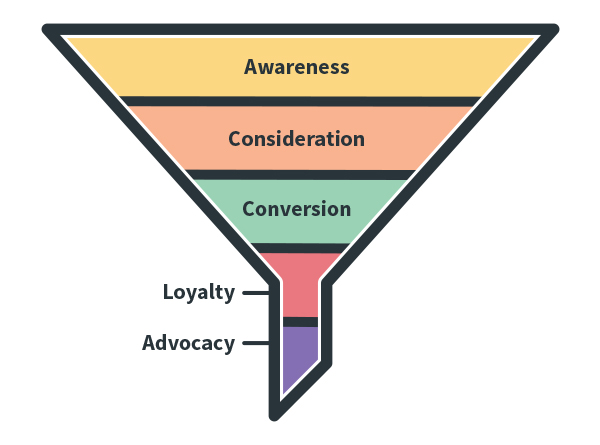
1. Top of Funnel (TOFU): Awareness & Attention
Here, you introduce your solution to prospects who may not even know your brand exists. The primary objective is cost-effective reach and high engagement to build audience pools.
2. Middle of Funnel (MOFU): Consideration & Intent
Prospects know who you are and are evaluating alternatives. You offer product demos, comparisons, buyer guides, and case studies.
3. Bottom of Funnel (BOFU): Conversion & Purchase
This is where performance marketing earns its keep. Prospects are ready to buy. Retargeting ads, dynamic product catalogs, and time-sensitive offers close the sale.
4. Post-Purchase: Retention & Advocacy
Acquiring a customer is expensive; retaining them produces profit. Post-purchase funnels leverage email flows, SMS, and loyalty cross-sells to boost Lifetime Value (LTV).
Performance Marketing Channels: Where Growth Actually Happens
Winning campaigns combine multiple channels to build resilience and avoid platform over-reliance.
| Channel | Best For | Typical Pricing Models |
| Search Engine Marketing (Google, Bing) | High intent, bottom-of-funnel buyers | CPC (Cost Per Click) |
| Paid Social (Meta, TikTok, LinkedIn) | Audience discovery, visual storytelling | CPM, CPC, CPA |
| Programmatic Display | Broad retargeting, visual touchpoints | CPM (Cost Per Mille) |
| Affiliate & Partner Marketing | Risk-free sales, publisher recommendations | CPA, Rev-Share |
| Native Advertising (Taboola, Outbrain) | Content-driven discovery, advertorials | CPC, CPM |
| Influencer / Creator Partnerships | Trust building, authentic product showcases | Fixed fee + Commission |
Performance Marketing Metrics: What to Track and Why
You cannot optimize what you do not measure. Performance marketing depends on clean quantitative data.
Core Efficiency Metrics
-
- CPC (Cost Per Click): How much you pay for every website visitor.
-
- CTR (Click-Through Rate): The percentage of viewers who clicked your creative.
-
- Conversion Rate (CVR): The percentage of visitors who complete the desired action.
Profitability & Scale: What Is ROAS and CPA?
Understanding what is ROAS and CPA is critical for maintaining profitable unit economics:
-
- CPA (Cost Per Acquisition): Total ad spend divided by the number of conversions. It tells you exactly how much money it costs to acquire a single customer or lead.

-
- ROAS (Return on Ad Spend): Gross revenue generated directly from ad spend. It evaluates direct channel efficiency.

- ROAS (Return on Ad Spend): Gross revenue generated directly from ad spend. It evaluates direct channel efficiency.
Rule of thumb: If you spend $1,000 on Meta Ads and generate $4,000 in revenue, your ROAS is 4.0x (or 400%). If your profit margin requires a 3.0x ROAS to break even, you are scaling profitably.
Performance Marketing vs Digital Marketing: Spotting the Difference
People often use these terms interchangeably, but they are not the same thing.
Digital marketing is the broad umbrella covering every single tactic conducted through digital devices—organic SEO, content marketing, brand PR, community building, and web design.
Performance marketing is a specific subset within digital marketing. It focuses explicitly on measurable return on investment, rapid experimentation, and paid conversion actions.
┌────────────────────────────────────────────────────────┐
│                   DIGITAL MARKETING                    │
│  ┌────────────────────────┐  ┌──────────────────────┐  │
│  │   Organic SEO & PR     │  │  Content Marketing   │  │
│  └────────────────────────┘  └──────────────────────┘  │
│  ┌──────────────────────────────────────────────────┐  │
│  │             PERFORMANCE MARKETING                │  │
│  │  Paid Ads • Affiliates • Direct-Response Funnels │  │
│  └──────────────────────────────────────────────────┘  │
└────────────────────────────────────────────────────────┘
Performance Marketing vs Brand Marketing: The Two Pillars of Growth
Marketers frequently pit these two against each other, but the best brands treat them as complimentary partners.
| Feature | Performance Marketing | Brand Marketing |
| Primary Goal | Direct sales, leads, immediate revenue | Awareness, brand equity, emotional trust |
| Timeline | Immediate to short-term (hours/days) | Long-term (months/years) |
| Measurement | Direct attribution (ROAS, CPA, CVR) | Sentiment, recall, share of voice, blended CAC |
| Creative Style | Direct-response, clear hooks, strong CTA | Narrative-driven, emotive, aspirational |
| Risk | Ad fatigue, sensitivity to rising media costs | Difficult to pinpoint direct financial ROI |
Brand equity lowers your customer acquisition costs over time. Performance marketing captures the demand your brand creates.
Real-World Performance Marketing Examples
To see how this works in practice, let’s review two common setups:
1. D2C E-Commerce Brand (Footwear)
-
- Strategy: Runs short-form video ads on TikTok and Meta highlighting waterproof running shoes.
-
- Funnel: The ad drives users to a tailored landing page featuring social proof and reviews. Non-purchasers receive dynamic retargeting ads highlighting a 15% first-order discount.
-
- Metric Target: Breakeven CPA of $35; target ROAS of 3.2x.
2. B2B SaaS Platform (Project Management)
-
- Strategy: Bids on high-intent search terms on Google Ads (e.g., “best team task tracker software”).
-
- Funnel: Search ad directs traffic to an interactive product tour offering a 14-day free trial. An automated email nurture sequence pushes trial users toward paid team onboarding.
-
- Metric Target: Cost Per Free Trial Signup under $45; conversion to paid plan above 12%.
Performance Marketing for Beginners: 4 Steps to Launch Profitably
If you are building your first campaign, keep things simple and avoid overcomplicating your setup:
-
- Pick One Clear Conversion Event: Choose one specific action to optimize for—whether that is an email signup, consultation call, or product purchase.
-
- Set Up Server-Side Tracking First: Do not rely solely on browser pixels. Install Google Tag Manager alongside platform Conversion APIs (Meta CAPI, Google Enhanced Conversions) before spending budget.
-
- Focus on Direct-Response Creatives: Visuals and messaging account for the majority of ad performance. Test 3 distinct hooks, 2 angles, and clear calls to action.
-
- Monitor Unit Economics Daily: Know your break-even CPA and minimum acceptable ROAS so you can scale winning creative batches and cut losing ones early.
Phone: +918618112263